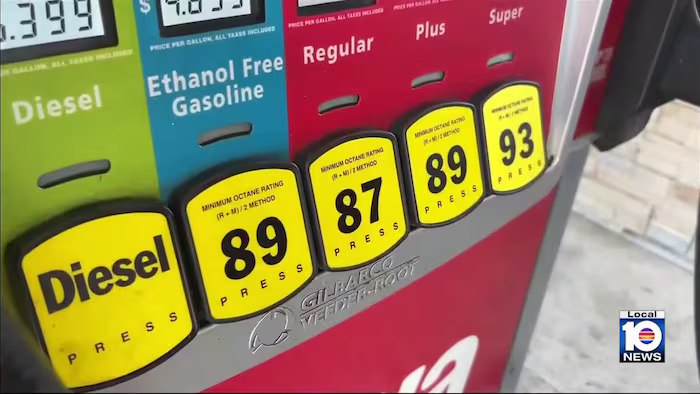
MIAMI — As diesel prices soar inside the United States, analysts say consumers should expect prices at the grocery store to continue to climb.
Leer en español
That is especially true for cold-chain perishables that require more refrigeration, like dairy, meats and produce.
Diesel engines power about three-quarters of the 17 million commercial vehicles registered in the U.S.
“The first time ever we have ever seen diesel in Florida above $6 dollars a gallon and in Miami even higher at $6.25 a gallon,” said GasBuddy petroleum analyst Patrick De Haan. “You can really say the U.S. economy runs on diesel.”
Transportation, storage and energy costs contribute more than 7% of total food costs, so when diesel prices rise, those costs get higher and trickle down to the consumer at check-out.
What makes up a food dollar?
From farms and processing to retail and restaurants, every $1 Americans spend on food is divided among industries across the supply chain.
Read more Bob Mackie, designer to the stars who dressed Cher and Marilyn and defined ’70s glamour, dies at 87

Tap a section of the dollar to explore.
Together, transportation, storage and energy account for 7.2¢ of every $1 spent on food.
Read more Knife-wielding man threatens rape, murder at Denny’s in Margate, police say
Source: USDA Economic Research Service, Food Dollar, 2024 industry group data.
View USDA source.
Values sum up to $1.
That is in addition to upward pressure that remains on gas prices.
Small business owner Xavier Miranda of Top Florida Roofing told Local 10 News his business also being hit by suppliers adding fuel surcharges as all businesses along the global supply chain work to offset rising costs.
“Miranda said what federal lawmakers should know is that “their decisions impact us, which in return impacts the entire community.”
Said De Haan: “The two biggest geopolitical tensions that are weighing at the pump (are the) US-Iran Conflict (and) Russian and Ukraine. There is not really a date when things will suddenly improve spontaneously. It is going to take work to mend the fences, restoring ties and deescalating the situation, for Americans to see any drastic improvement in what they are paying at the pump.”
De Haan added that the brewing trade war between the U.S. and Canada could also place upward pressure on prices since more than 60% of our imported crude oil comes from Canada.