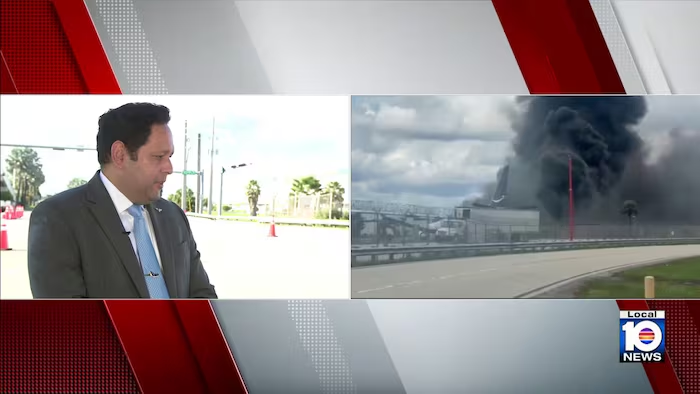
MIAMI-DADE COUNTY, Fla. — Miami International Airport is not equipped with arresting systems that the FAA says have been installed at more than 120 airports nationwide to safely stop planes that go past the end of a runway.
And after Sunday’s fatal plane crash at MIA involving an Amazon cargo plane, many are wondering whether those systems could have saved lives.
“It prevents the airplane from leaving the airport premises,” airline Captain Francisco Diaz, who has flown the same plane, said. “It’s a soft concrete that is after the runway and if the airplane gets into that area, it becomes like mud and stops the airplane from continuing moving forward.”
Those beds of lightweight, crushable material at the end of a runway have been credited by the FAA with helping save at least 497 lives aboard planes that overran runways.
MIA does not have EMAS, or the Engineered Materials Arresting System, because the FAA requires airports that don’t instead have a 1,000-foot runway safety area at the end of the tarmac, which the airport has. However, Diaz said he believes EMAS could have prevented the Amazon cargo plane from going into the parking lot Sunday.
According to the Federal Aviation Administration, the Boeing 767 cargo plane overran a runway at MIA around 2 p.m. Sunday and plowed across a road used by warehouse workers and other businesses that surround the airport.
Miami-Dade Fire Rescue officials said several vehicles were struck by the plane in a parking lot along Northwest 67th Avenue, between Northwest 25th Street and 36th Street.
Read more Trump administration makes another appeal to the Supreme Court to allow mail ballot restrictions
“So what we see in the video is what we call an unstable approach,” Diaz said. “The airplane was approaching the runway in a state that was outside of the standard. You can see that it’s pitching down a little bit and then when it reaches the landing zone of the runway it floats forever, right? And it actually makes two little bounces in the air before it touches down on the main gear. From the training perspective, you’re supposed to go around – go back in the air when something like that happens, specifically to avoid this from happening.”
Diaz is the current captain of a Boeing 747, but flew the same plane involved in Sunday’s crash a decade ago.
“This airplane registration is registration N19977A. It was the first Amazon Prime airplane about 10 years ago, and the company I used to work for, we were the ones that started this contract with Amazon and I flew this specific tail number 10 years ago,” he said.
Diaz urged the public to wait for the investigation’s findings before deciding who or what was at fault for Sunday’s crash, and urged Miami-Dade officials to invest in EMAS for MIA’s runways.
“We don’t know if the airplane had any malfunction. We don’t know if the systems had any issues, like hydraulics or brakes or anything like that,” he said. “For the pilots out there, every time you are unstable in an approach, go around. Try a second time. Go back in the air and come back and try. For the authorities, Miami airport is doing a $9 billion investment in infrastructure. Please include something like EMAS for all the runways.”
Those flying into or out of MIA Monday are urged to check with their airline for their flight status before arriving at the airport.
Read more 300 rodent droppings found in pizzeria – roaches in cooler where raw meat is stored
Broward
Florida Keys
Cities▾
Fort Lauderdale
Coral Springs
Davie
Deerfield Beach
Doral
Hialeah
Hollywood
Homestead
Lauderhill
Miami Beach
Miami Gardens
Miramar
Pembroke Pines
Plantation
Pompano Beach
Sunrise
Tamarac