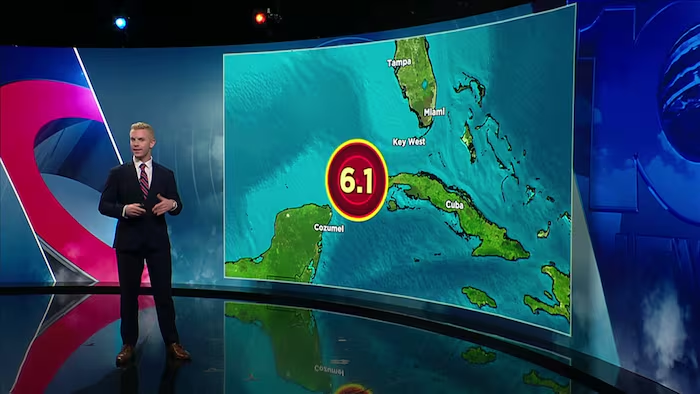
PEMBROKE PARK, Fla. — A rare magnitude 6.1 earthquake near western Cuba that was felt across parts of Florida on Monday could be followed by aftershocks in the days and weeks ahead, according to the U.S. Geological Survey (USGS).
Read more Miami-Dade mother ordered to have no contact with daughter after child abuse arrest
Leer en español
The earthquake happened around 2 p.m. Monday about 65 miles west-northwest of Mantua, Cuba, according to the USGS. Shaking reports came in from several parts of Florida, including South Florida, Southwest Florida, Tampa Bay, Orlando, Jacksonville and parts of the Panhandle.
The National Tsunami Warning Center said there was no tsunami threat for Florida or the Gulf Coast.
While the main earthquake is over, the USGS says aftershocks remain possible near the source region west of Cuba. If strong enough, another tremor could potentially be felt again in South Florida, especially in taller buildings.
According to the latest USGS aftershock forecast, there is a 98% chance of at least one magnitude 3 or greater aftershock over the next seven days. The chance of at least one magnitude 4 or greater aftershock is 67%, while the chance of at least one magnitude 5 or greater aftershock is 15%.
Read more Mother to judge: Fatal shooting in Lauderhill ‘could have been prevented’
Over the next 30 days, the USGS forecast shows a greater than 99% chance of at least one magnitude 3 or greater aftershock, a 77% chance of at least one magnitude 4 or greater aftershock and a 22% chance of at least one magnitude 5 or greater aftershock.
The chance of at least one magnitude 6 or greater earthquake over the next month is 3%. The chance of a magnitude 7 or greater earthquake remains less than 1%.
Those higher 30-day probabilities do not mean the aftershock sequence is expected to get worse. In general, aftershock activity tends to decrease over time, but longer time periods naturally carry higher odds because there is more time for aftershocks to occur.
The USGS says aftershock forecasts are not earthquake predictions. Scientists cannot predict the exact time, location or magnitude of the next earthquake. Instead, the agency uses statistical models based on past aftershock sequences and updates the forecast as new earthquakes are detected.
Read more Jury hears dueling narratives at trial of Texas teen who killed another athlete at school track meet